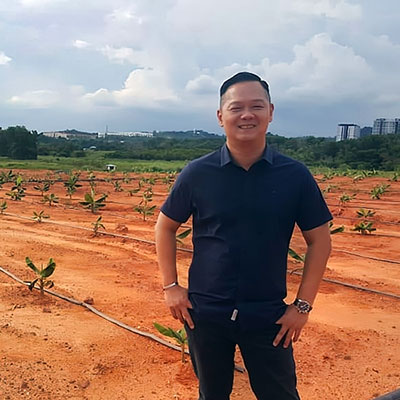
Shaun has been going bananas for the last 16 months.
Before agriculture, he spent six years in a completely different world, a modular construction system for workers' accommodation.
On paper, it made sense. The product was solid, and the logic checked out.

So, Shaun and his partners pitched relentlessly to industrial areas in Penang and Johor, convinced factories would be the decision-makers.
They weren't.
The industries themselves didn't own most worker dormitories. Independent operators ran them to keep the costs low. Shaun's solution, while well-built, was priced far above what the market would pay. By the time this became clear, it was too late.
The product was good, but the audience was wrong.
After years of effort with no meaningful results, the team made the bitter decision to call it off.
The In-Between Phase
The next three months were quiet and tremendously heavy, filled with familiar questions many entrepreneurs face after a fall.
Do I go back to sales?
Corporate life?
Or do I try something entirely different?
During that period, he spent time with a friend who runs an R&D banana farm in Serdang. What started as curiosity slowly turned into routine, with Shaun showing up almost every day, learning from the ground up, literally.
That's when he noticed something most people overlook.
Many farmers were nearing retirement, and young people were almost nowhere to be seen. Shaun saw a gap forming, and within the next five years, a potential shortage that few were preparing for.
So, he leapt.

Starting from the Soil
Shaun began with papayas, then chillies and bananas. His interest in agriculture had always been there, just that he never pursued it seriously in his earlier years.
And this time, he committed fully. His focus wasn't branding or marketing, but yield. In agriculture, if you grow well, buyers come to you.
Off-takers were already in place. There was no pitching, no closing. Income, while not glamorous, was relatively predictable, often within two weeks. Margins existed as long as crops were planned correctly and rotated.
But agriculture is anything but easy.
Weather, Wildlife & Waiting
Some crops, like papayas, take 7 months to produce fruit. That's seven months of fertilisers, labour, and maintenance without seeing a single sen or ringgit. There are no invoices to chase or deals to close, just waiting.
Heavy downpours can wipe out crops overnight, and fertilisers aren't cheap. When that happens, Shaun sometimes breaks even or loses everything and has to start all over. It takes more patience than most people can imagine.
And sometimes, the challenges come on four legs. A herd of elephants once trampled through Shaun's plantation, destroying everything in their path. Months of work disappeared in a day.

Not every planting worked out. Early failures hit hard, often harder than expected. Despite investing time, money, and effort, results fell short. Disappointment was inevitable, painful even.
Yet Shaun didn't quit and kept going.
He just stopped betting everything on a single crop.
He learned to rotate, diversify, and adapt. Soon, he introduced poultry into the mix. Of course, that came with its set of challenges.
To reduce risk, Shaun installed an irrigation system to tackle the dry seasons and electric fences to keep wild animals out. At times, he even set off fireworks to scare them away.
The Man Behind the Farmer
Shaun jokes that he looks notorious, especially when he doesn't smile. But beneath that exterior is someone kind, sometimes too gracious. And that generosity came at a cost.
He's been taken advantage of more than once. Some would promise him the sun and the moon. Yet only to bail out on him after all the work rendered. It was a challenge he had to confront, not by changing who he is, but by becoming wiser about boundaries and decisions.

For Those Considering Agriculture
He advised against jumping into agriculture just because it sounds like a cash cow. You need a genuine interest, time to explore and patience to learn.
It's a dirty job. Be it rain or shine, you have to show up. One can't just inject money and expect things to grow on their own. It demands hands-on work and constant presence at the farms.
Hard decisions are unavoidable, whether to cut losses or inject more capital. Even managing farmers requires a particular way of communication. Say the wrong thing, and doors shut quickly.
Agriculture, to him, isn't "sexy".
There are no suits, no air-conditioned offices. Compared to corporate life, it's isolating. Most days, he's with mud, heat, wild animals, rain and all that jazz. As he puts it, it often feels like living in the jungle.

Still Figuring It Out
Shaun admits he's still adapting.
In business, you don't win by avoiding problems. You survive by staying long enough to learn, adjust, and try again.
He's given himself five years to make it work, not to chase the most significant returns, but to keep cash flow positive so the business remains sustainable.
Along the way, he's met many struggling entrepreneurs, crushed by poor cash flow, razor-thin margins, sales problems, or simply being too nice. In those situations, Shaun is brutally honest.
Sometimes, it's better to work for others.
Being called "boss" means nothing if the business can't sustain you. Titles don't pay the bills. Reality does.
And agriculture, as unsexy as it may be, has taught him that better than anything else ever could.

